Choosing Industrial Powder: Application Fit and Specification Checks
THE BUYER'S GUIDE / SELECTION
Choosing Industrial Powder: Application Fit and Specification Checks
Selecting the right industrial powder depends on matching functional requirements — filling, reinforcement, surface finish, or chemical reactivity — to the verified properties of each mineral type. This guide walks procurement teams through the key selection criteria for calcium, talc, kaolin, and metakaolin powders, explains where each type fits, and identifies the specification checks that matter most before purchasing.

Primary function required: Determine whether the role is filling (Calcium), reinforcement and thermal stability (Talc), surface quality and pigment (Kaolin), or pozzolanic reactivity and structural durability (Metakaolin) before selecting a powder type.
Application sector and specification fit: Match the powder type to the target sector (construction, automotive plastics, paper, ceramics, or high-performance concrete) and verify critical technical parameters — particle size distribution, whiteness, chemical reactivity, plasticity, and purity — against the application's performance and processing requirements.
What Is Industrial Powder and Why Selection Matters
Industrial Powder is a broad category of finely milled mineral materials used as fillers, reinforcement agents, surface improvers, and pozzolanic binders across construction, plastics, paper, and ceramics. Choosing the wrong grade can compromise structural integrity, surface quality, or processing efficiency, while the right choice reduces material waste and total project cost.
For business buyers and procurement teams, the selection process starts with one question: what functional role must the powder play in the end product? The four primary types — Calcium Powder, Talc Powder, Kaolin Powder, and Metakaolin — each serve distinct roles, and their specifications must align with the demands of the application before a purchase order is placed.
Key Selection Criteria
1. Define the Primary Function Required
The first and most important selection criterion is identifying whether the powder's role is filling, reinforcement, surface enhancement, or chemical reactivity.
- Filling (bulk volume, cost efficiency): Calcium Powder is the standard choice for high-volume applications such as cement, concrete, and wall putty. It provides an economical solution where large quantities are needed without advanced performance requirements.
- Reinforcement and thermal stability: Talc Powder acts as a reinforcement agent in plastics and a matting agent for coatings. Its benefit in automotive and industrial plastics is improved heat distortion temperature and dimensional stability — properties critical where heat cycling occurs.
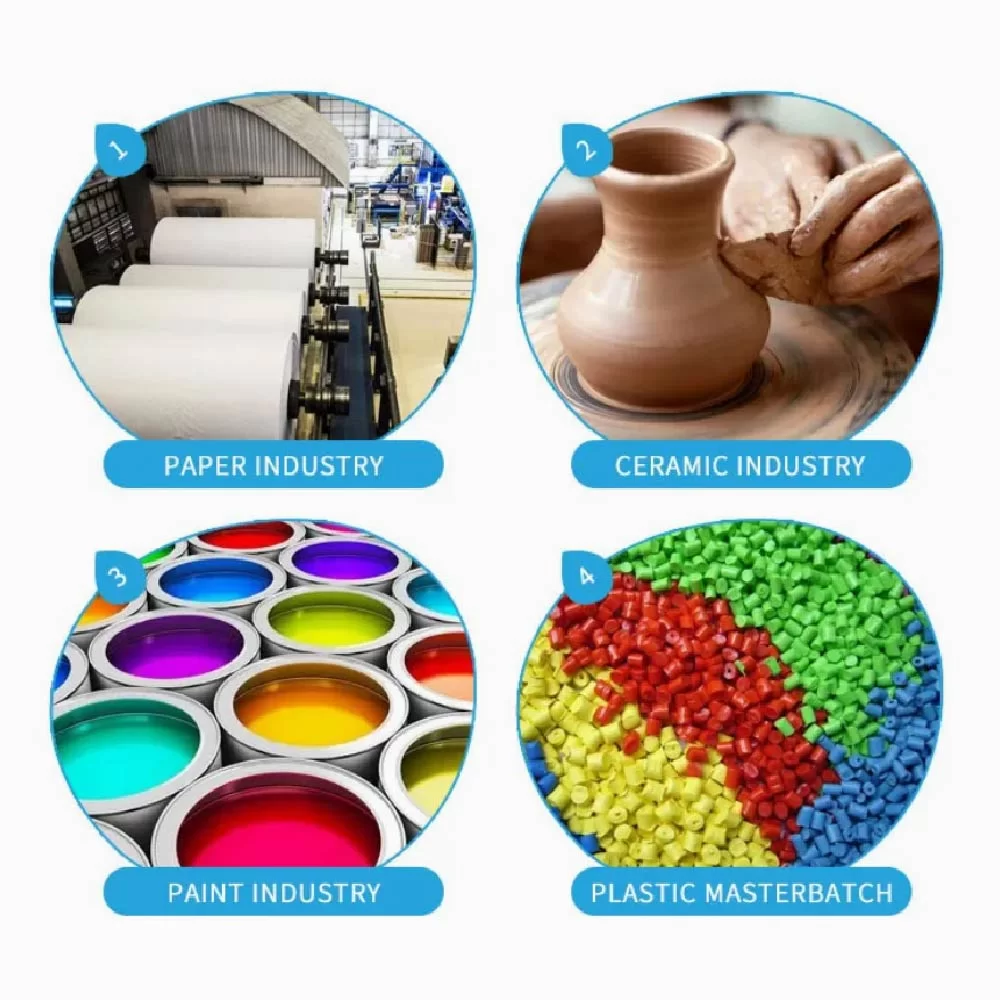
- Surface quality and pigment function: Kaolin Powder is essential where smoothness, whiteness, and opacity matter. Paper coating and ceramic manufacturing rely on kaolin's fine particle structure to deliver printability, gloss, and a consistent surface.
- Pozzolanic reactivity and durability: Metakaolin is a high-performance pozzolan used in reinforced concrete and mortar. It reduces permeability, inhibits alkali-aggregate reactions, and provides resistance to sulfate and chloride attacks — benefits that matter in demanding structural and infrastructure applications.
2. Match Powder Type to Application Sector
Different industries place different demands on industrial powders. The table below summarises application fit based on confirmed product descriptions:
| Powder Type | Primary Application Sectors | Key Performance Benefit |
|---|---|---|
| Calcium Powder | Construction (cement, concrete, wall putty) | Low cost / high volume filling |
| Talc Powder | Automotive plastics, industrial coatings | Stiffness and heat resistance |
| Kaolin Powder | Paper coating, ceramics | Smoothness, gloss, printability |
| Metakaolin | High-performance concrete, mortar | Reduced permeability, durability |
A buyer specifying material for a paper mill has fundamentally different requirements from one sourcing filler for bulk concrete. Applying kaolin-grade specifications to a concrete fill job adds unnecessary cost; using calcium filler for paper coating will not meet surface quality standards.
3. Check Structural and Surface Specification Requirements
Beyond type, buyers should verify that the specific batch or grade meets the technical parameters relevant to the application:
- Whiteness: Relevant for kaolin used in paper and ceramics where visual quality is a selling point.
- Particle size distribution: Critical for all types. Precision milling to specific particle size distributions affects both performance and processing — too coarse, and fillers fail to integrate uniformly; too fine, and handling and dispersion may become challenging.
- Chemical reactivity: For metakaolin, reactivity governs how effectively it contributes to compressive strength gain and permeability reduction. Confirming reactivity level with the supplier before bulk ordering avoids performance shortfalls on-site.
- Plasticity: Relevant for kaolin in ceramic forming processes where workability affects production yield.
- Purity and consistency: For all types, raw material sourcing and rigorous quality testing (whiteness, plasticity, chemical reactivity) underpin batch-to-batch consistency, which is especially important in continuous manufacturing lines.
4. Evaluate Durability and Long-Term Performance Needs
For structural applications, consider the long-term durability profile of the powder:
- Metakaolin stands out for applications where structures face exposure to aggressive environments — sulfate-rich soils, marine conditions, or high-chloride exposure. Its permeability-reducing effect provides measurable protection over the service life of a structure.
- Talc extends the service life of plastic components by improving dimensional stability and heat resistance, reducing deformation risk in elevated-temperature service conditions.
- Kaolin contributes to durability in ceramics by forming a stable, dense microstructure during firing.
- Calcium Powder, while primarily a cost-efficient filler, still contributes to dimensional stability in bulk construction mixes when correctly specified.
5. Consider Economic Impact Alongside Performance
Not every application justifies premium mineral grades. A practical procurement decision weighs performance gain against economic impact:
- Calcium Powder: Low cost, high volume — suited to applications where the primary requirement is bulk filling.
- Talc Powder: High value in automotive plastics where replacing lower-performing alternatives reduces downstream warranty and replacement costs.
- Kaolin Powder: Justifies a quality premium when surface appearance and printability determine the market value of the end product.
- Metakaolin: The investment is justified in high-performance concrete where early strength gain and extended structural life reduce lifecycle costs.
Applicable Product
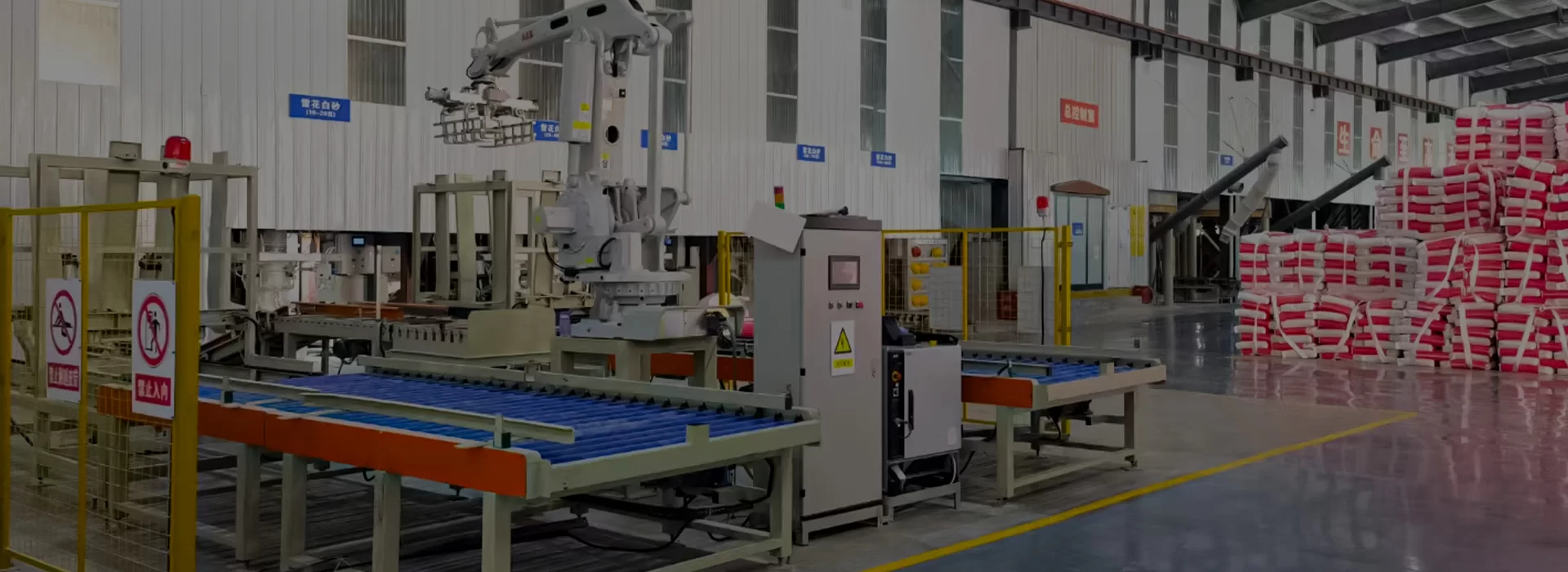
Hebei Quanerduo Mining Development Co., Ltd. offers a portfolio covering all four types under its Premium Industrial Powder range, which includes Calcium Powder, Talc Powder, Kaolin Powder, and Metakaolin. The range addresses the full spectrum of application sectors — from bulk construction to high-performance concrete, paper coating, and automotive plastics — supported by precision milling, quality control testing, and custom formulation capabilities.
Buyers can use the five criteria above to identify which powder type fits their functional brief and then request specific grade information and sample testing before finalising a supply arrangement.
Summary: Selection Decision Flow
Before requesting a quote or placing an order for any industrial powder, procurement teams should confirm:
- Primary function required — filling, reinforcement, surface quality, or chemical reactivity?
- Application sector — construction, plastics, paper, ceramics, or mixed use?
- Critical specifications — particle size, whiteness, reactivity, plasticity, purity?
- Durability requirements — standard service conditions or aggressive environments?
- Economic fit — does the performance gain justify the grade selected?
Matching these five checks against the confirmed properties of each powder type will reliably narrow the selection to one or two candidates before any sample testing stage begins.
THE PEOPLE

About the author
THE COMPANY
Hebei Quanerduo Mining Development Co., Ltd.
Established in 2008,is a professional engaged in the research, development, sale A wide range of flooring aggregates, including flooring flakes, sand, adhesive, and gravel. and service of large mineral products enterprises, Mainly Produces Gravel, Pebble, natural color sand,glass sand and quartz sand.We are located in Shijiazhuang City,capital of Hebe province with convenient transportation access.…
YOUR NEXT STEP
Bring your brief. Start a useful conversation.
Use case, specification, quantity and delivery window: make the next conversation specific.