
Sourcing high-purity industrial minerals from East Asia requires a deep understanding of the geological diversity and processing capabilities available in the region. For global procurement officers, finding reliable stone china suppliers involves evaluating not just the raw material availability, but the beneficiation technology that transforms raw geological resources into standardized industrial powders. This guide examines the technical specifications and selection criteria for non-metallic mineral powders used in modern construction and manufacturing.
The demand for high-performance fillers like Calcium, Talc, Kaolin, and Metakaolin has grown as industries strive for better structural integrity and cost-efficiency. Whether it is enhancing the compressive strength of reinforced concrete or improving the heat distortion temperature of automotive plastics, the chemical purity and particle size of the mineral powder are the primary drivers of the final product's quality. Understanding these technical nuances is essential for minimizing material failure and optimizing production costs.
Readers will explore the specific functional roles of different mineral powders, the critical quality control parameters used in professional laboratories, and a framework for evaluating supplier capabilities. By focusing on the intersection of geological advantage and advanced processing, this analysis provides a technical roadmap for procuring industrial powders that meet strict international standards for purity, consistency, and performance.
Industrial Mineral Sourcing in China
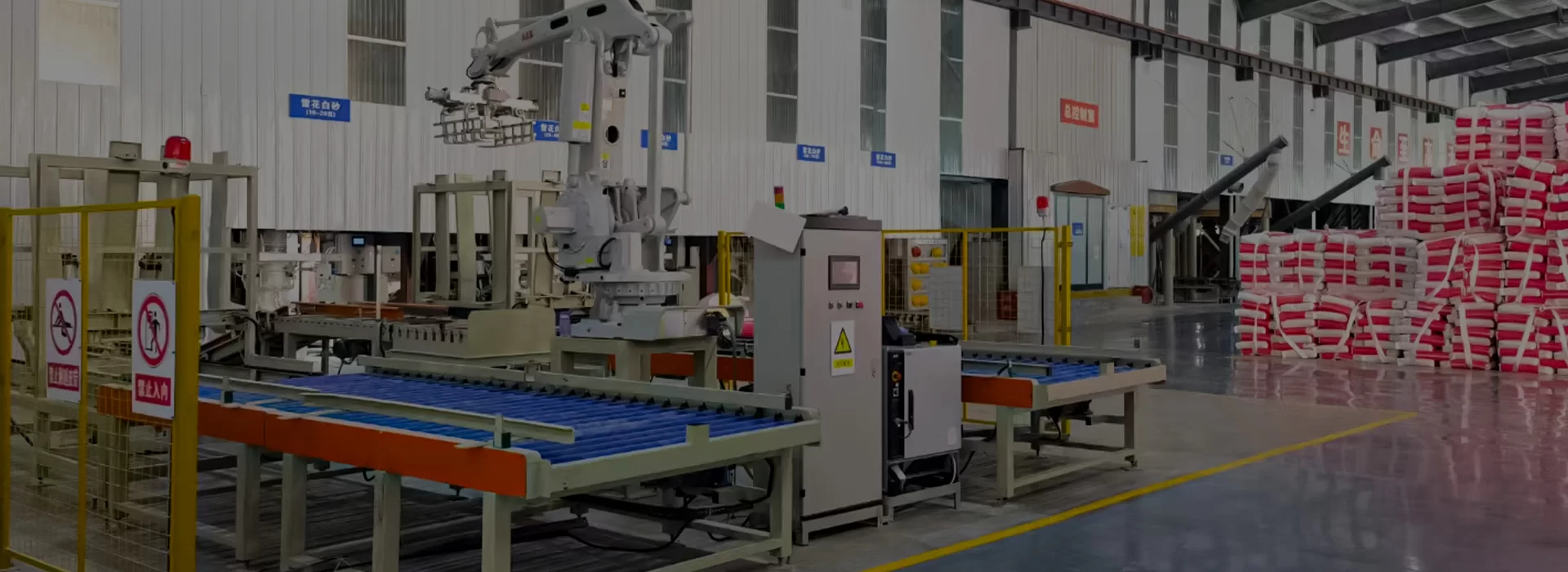
The non-metallic mineral sector in China, particularly in regions like Hebei province near the Taihang Mountain range, benefits from significant geological deposits of quartz, gravel, and clay. The industrialization of these resources depends on integrated workshops dedicated to processing, beneficiation, and laboratory testing. A professional supply chain in this sector does not simply extract material; it employs scientific management and multi-layer quality control systems to ensure that the resulting industrial powders—such as Metakaolin or Talc—possess the specific chemical reactivity required for high-tech applications. For instance, the transition from raw clay to high-performance pozzolans requires precise calcination temperatures to activate the mineral's properties, a process that separates basic fillers from engineered industrial materials. This systemic approach ensures that bulk shipments maintain consistency across thousands of tons, which is critical for large-scale infrastructure projects where material variance can lead to structural instability.
Strategic Selection of Non-Metallic Powders
Choosing the correct industrial powder requires a balance between the desired mechanical properties of the end product and the economic constraints of the project. The following analysis breaks down the technical dimensions of the most common mineral powders used in B2B manufacturing.
Material-Specific Performance Factors
Different minerals provide distinct structural benefits. While Calcium powder serves as a cost-effective filler for wall putty, Metakaolin is utilized as a high-performance additive to reduce permeability in concrete. The choice depends on whether the priority is bulk filling, chemical reactivity, or surface finish.
| Mineral Type | Primary Function | Key Benefit | Typical Application |
|---|---|---|---|
| Calcium Powder | Economic Filling | Low Cost / High Volume | Wall Putty / Cement |
| Talc Powder | Reinforcement | Heat Resistance | Automotive Plastics |
| Kaolin Powder | Plasticity / Coating | Surface Smoothness | Ceramics / Paper |
| Metakaolin | Pozzolanic Activity | Compressive Strength | Reinforced Concrete |
| Quartz Sand | Structural Base | Hardness / Stability | Glass / Construction |
| Mixed Fillers | Balanced Properties | Optimized Cost-Performance | General Manufacturing |
Precision Milling and Particle Distribution
The efficiency of an industrial powder is heavily dependent on its particle size distribution (PSD). Advanced grinding technology is employed to achieve specific micron levels, which directly affect the packing density of concrete or the gloss level of coated paper. Coarser particles may be suitable for bulk fillers, but high-end applications like aerospace-grade plastics require ultra-fine milling to ensure a homogeneous mixture and prevent stress concentrations in the final material.
Pozzolanic Activity in Concrete
Metakaolin acts as a highly reactive pozzolan, reacting with calcium hydroxide during cement hydration to produce additional calcium silicate hydrate (C-S-H) gel. This process significantly densifies the microstructure of the concrete, reducing the permeability of the material. Consequently, structures are better protected against the ingress of sulfate and chloride ions, which is critical for marine environments and bridge infrastructure.
Polymer Reinforcement Mechanisms
In the automotive industry, Talc powder is used to enhance the properties of Polypropylene (PP). By acting as a reinforcement agent, it increases the stiffness and heat distortion temperature of interior components such as dashboards and bumpers. This prevents the plastic from warping under extreme heat conditions and improves the overall dimensional stability of the part during the injection molding process.
Opacity and Surface Gloss Optimization
Kaolin is essential for the paper and ceramics industries due to its ability to improve whiteness and opacity. In paper coating, it creates a smooth surface that optimizes ink absorption and reduces bleed-through. This results in sharper print quality and a higher gloss level, which is a primary requirement for premium packaging and high-quality publication printing.
Alkali-Aggregate Reaction Inhibition
A common failure in concrete is the alkali-aggregate reaction (AAR), which causes internal expansion and cracking. Metakaolin effectively consumes the alkalis within the cement paste, thereby inhibiting these harmful reactions. This chemical role extends the operational lifespan of the structure and reduces the frequency of expensive maintenance and repair cycles.
Global Logistics and Moisture Control
Because industrial powders are susceptible to clumping and contamination, moisture-proof packaging and efficient bulk handling are mandatory. For international shipping to regions like Southeast Asia or Europe, suppliers must implement rigorous storage protocols to ensure that the powder arrives in a free-flowing state, maintaining the chemical reactivity and particle size specified in the procurement contract.
FAQ
What is the main technical difference between Kaolin and Metakaolin?
Kaolin is used primarily for its plasticity in ceramics and its ability to create smooth coatings in paper production. In contrast, Metakaolin is a calcined version of kaolinite that functions as a high-performance pozzolan, specifically designed to increase the strength and durability of reinforced concrete by reacting with cement by-products.
How does Talc powder improve automotive plastic components?
Talc serves as a reinforcement agent in polymers like Polypropylene. It significantly increases the stiffness, heat distortion temperature, and dimensional stability of the plastic, which is essential for components that must maintain their shape under thermal stress, such as automotive bumpers and dashboards.
Can Metakaolin actually prevent concrete from cracking due to alkali reactions?
Yes, Metakaolin is highly effective at consuming alkali within the cement, which inhibits the alkali-aggregate reaction (AAR). By preventing the formation of expansive gels that lead to internal pressure, it reduces the risk of cracking and extends the overall structural lifespan of the concrete.
Which industrial powder is most suitable for exterior wall putty?
Calcium powder is the ideal choice for wall putty. Its excellent filling properties and ease of sanding provide a smooth, level base for painting while remaining the most economical solution for bulk construction applications.
How does the choice of Kaolin affect printing quality on paper?
Kaolin improves the whiteness, surface smoothness, and ink absorption characteristics of the paper. This allows for sharper image reproduction, higher gloss levels, and reduced ink bleed-through, which are critical for premium grade commercial printing.
What role does Talc play in the production of industrial coatings?
In the coatings industry, Talc acts as a suspending agent to prevent pigments from settling at the bottom of the container. Additionally, it serves as a matting agent, allowing manufacturers to precisely adjust the gloss level of the final paint film to meet specific aesthetic or functional requirements.
References and further reading
- Industrial Mineral Processing Standards for Non-Metallic Powders (Technical Manual).
- Comparative Analysis of Pozzolanic Additives in High-Performance Concrete.
- Polymer Reinforcement: The Role of Talc in Automotive Thermoplastics.